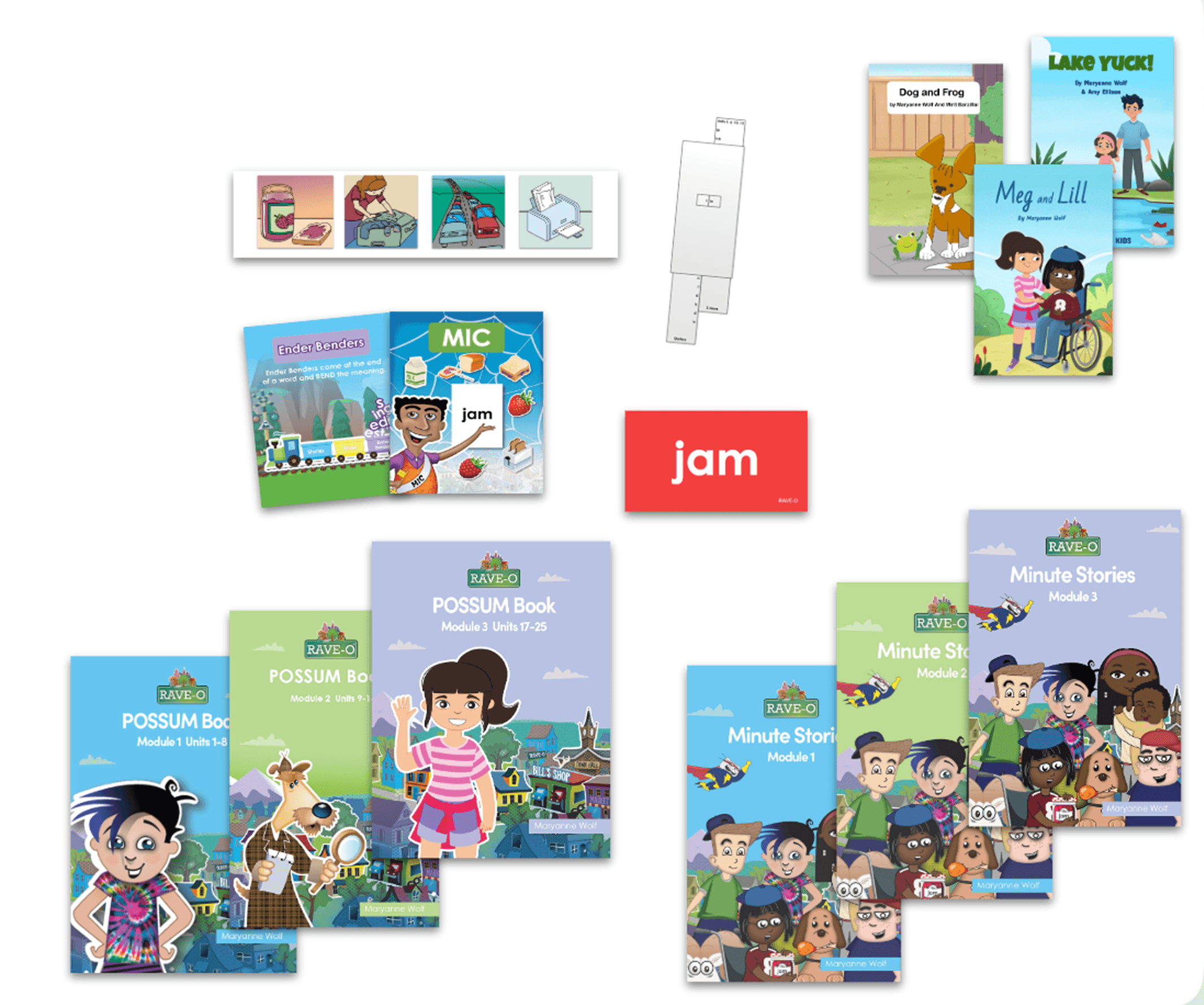
RAVE-O offers structured daily lessons that systematically develop students' knowledge of words, their accuracy and fluency in word recognition, spelling, and writing skills. Weekly routines are designed to reinforce newly learned skills through repeated practice and application in various contexts, from RAN-like word and letter-pattern charts for fluency to Minute Stories for comprehension.
The first purpose of each unit is to introduce a group of Core Words, which we call MIM Words (Many Interesting Meanings Words). All our Core Words have common letter patterns in English, at least two or three possible meanings, and at least two grammatical functions. Through a series of hands-on activities, students learn how every Core Word is connected to many associated words. Unique to RAVE-O is the frequent and explicit emphasis on connecting all the information about a word as it is encountered at the letter- pattern (sublexical), word ( lexical), and connected text levels. Thus the reader encounters the same words at three levels every day, thus reinforcing the very connections made by the developing reading brain. Our data reinforce how knowing the multiple aspects of a word increases how fast that word is recognized and understood.
Each lesson comes with a slide deck that includes carefully scripted dialogue and recommendations for the teacher. It is assumed that after teachers have learned the program that they no longer need to use exact scripting for their routines. Warm-up activities always begin the lesson to integrate and reinforce previous learning. Frequent review and connecting known information with new concepts builds students’ analogical skills, memory, personal confidence in learning, and subsequent success.( Growth mindset is embodied in this approach.)
Next, students are introduced to one or two new Core Words. They learn the multiple meanings (polysemy), sounds, letters, and letter patterns in the words. They examine and “jam” together the letters in the rime and “slam” on different starters to make words in the rime family. Students write the words and sentences in their journals.
In addition to Core Word introductions, lessons include activities in morphology as students learn common suffixes as Ender Benders that bend the meaning of words, and Beginner Benders. Research indicates that only knowing the most common morphemes can increase word recognition and understanding, as well as diminish the cognitive load of longer words. They also learn syntactic functions of words by meeting frolicsome characters called Nina Noun, Victor Verb, Paulo the Word Painter, and Pepe Preposition.

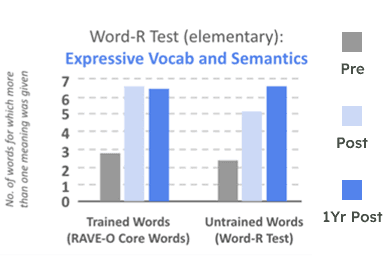
Students apply all aspects of word knowledge—including all meanings, grammatical uses, and morphemes of Core Words—to their reading of the same words in connected text. RAVE-O increases fluency and comprehension through short, decodable Minute Stories, designed around the Core Words. Students learn to move flexibly from one meaning to the next in stories specifically created to help them understand the multiple meanings and different syntactic uses of words. The progression of our Units helps students– with all their different learning and language abilities— access the skills and knowledge to retrieve, decode, understand words and comprehend them in connected text from stories to books. Our data indicate that this approach increases not only their vocabulary for core words, but generalizes to new polysemous words both after the intervention and a year later. No program possesses such data.
The program includes materials designed to be engaging and interactive, supporting both students and teachers through comprehensive instructional guides and resources. Teachers have a variety of high- quality materials including both printed and digital materials. These include clear Teacher Guides, daily lesson plans, objectives, scripted instruction, and important “tips” that aid memory and engagement. “Minute Stories” accompany lessons that increase not only decoding and comprehension, but also a comfort with reading for the struggling reader. In addition, various stories emphasize each of the deep reading processes from background knowledge (non-fiction) to empathy and critical thinking.
Each lesson is structured with student objectives, steps, and timing recommendations. There are also posters, card sets, and other classroom materials that support instruction.
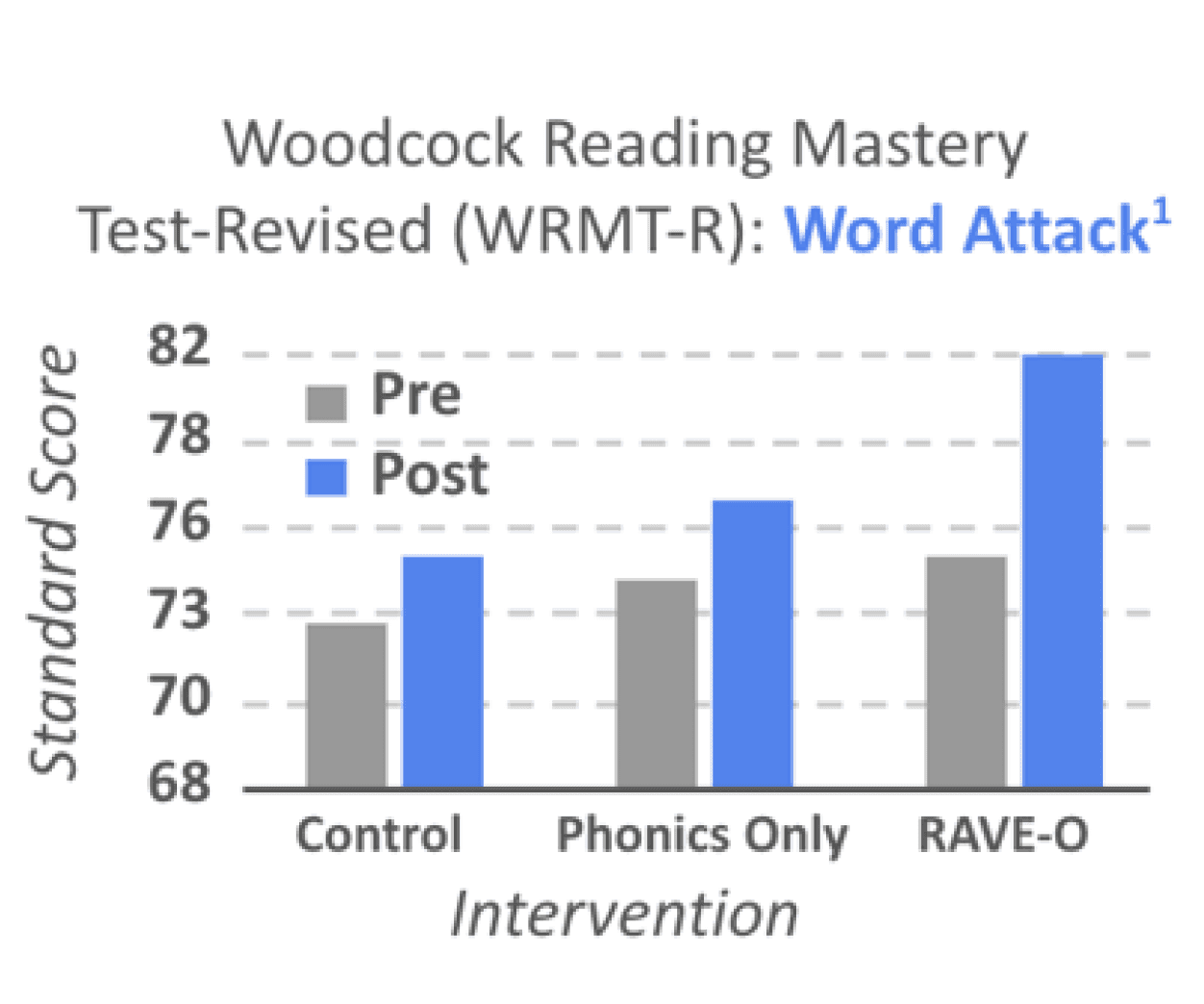
NICHD funded, RCT research found students receiving instruction in RAVE-O outperformed comparison groups in areas of decoding, vocabulary, and comprehension
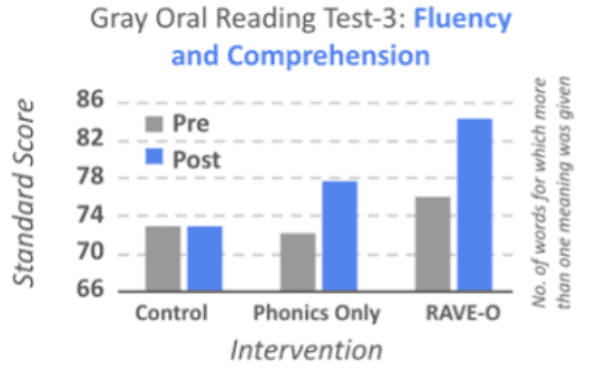
Changes in Oral Reading Quotient (fluency + comprehension) Standard Scores on Gray Oral Reading Test-3
Short-Term and long term gains in vocabulary knowledge and semantic flexibility, RAVE-O combined with phonemic awareness and blending program.
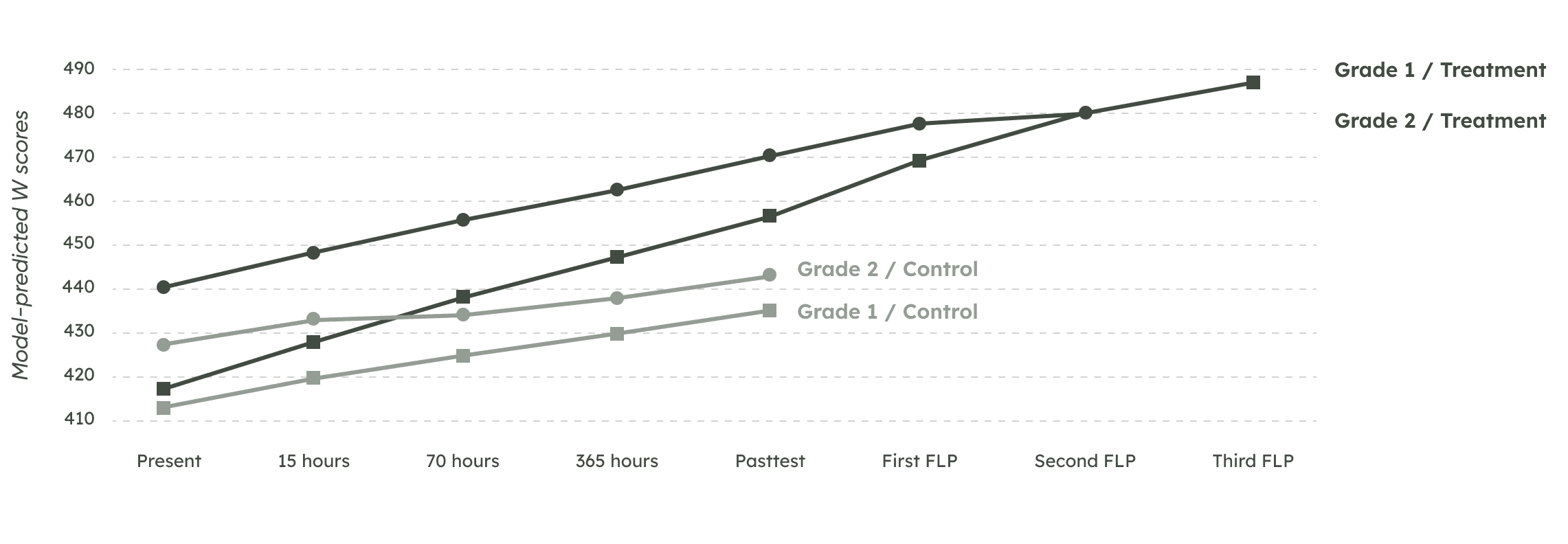
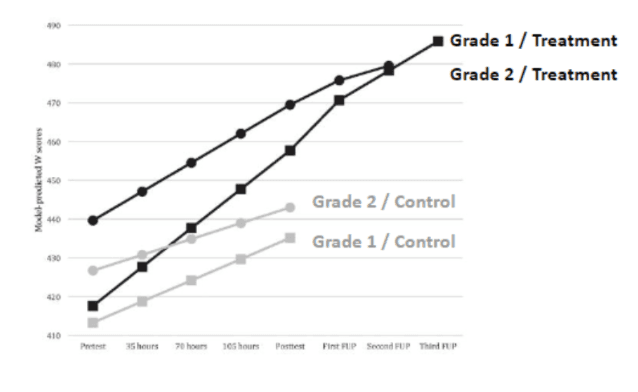
Model-predicted Woodcock Reading Test-Revised Passage Comperhension ( W scores) by grade and intervension Status)
Please send sales inquiries to [email protected]
or call (707) 879-8748